Convert text into realistic, customizable speech for narration, voiceovers, and real-time applications.
AI Voice Generators use machine learning models to synthesize human-like speech from text (TTS) or transform existing audio into alternate voices (voice conversion). This use case covers realistic voice cloning, multi-language text-to-speech, narrator and character voice styles, SSML controls for prosody and pauses, streaming/real-time TTS, and voice-changing applications for podcasts, audiobooks, e-learning, games, IVR, and marketing. Popular tools in this space include ElevenLabs, Murf AI, PlayHT, Speechify, Descript, and WellSaid Labs — each balances voice naturalness, licensing, API access, and pricing differently. This page helps teams and creators choose the right product by comparing capabilities, typical workflows, integration options, and implementation considerations.
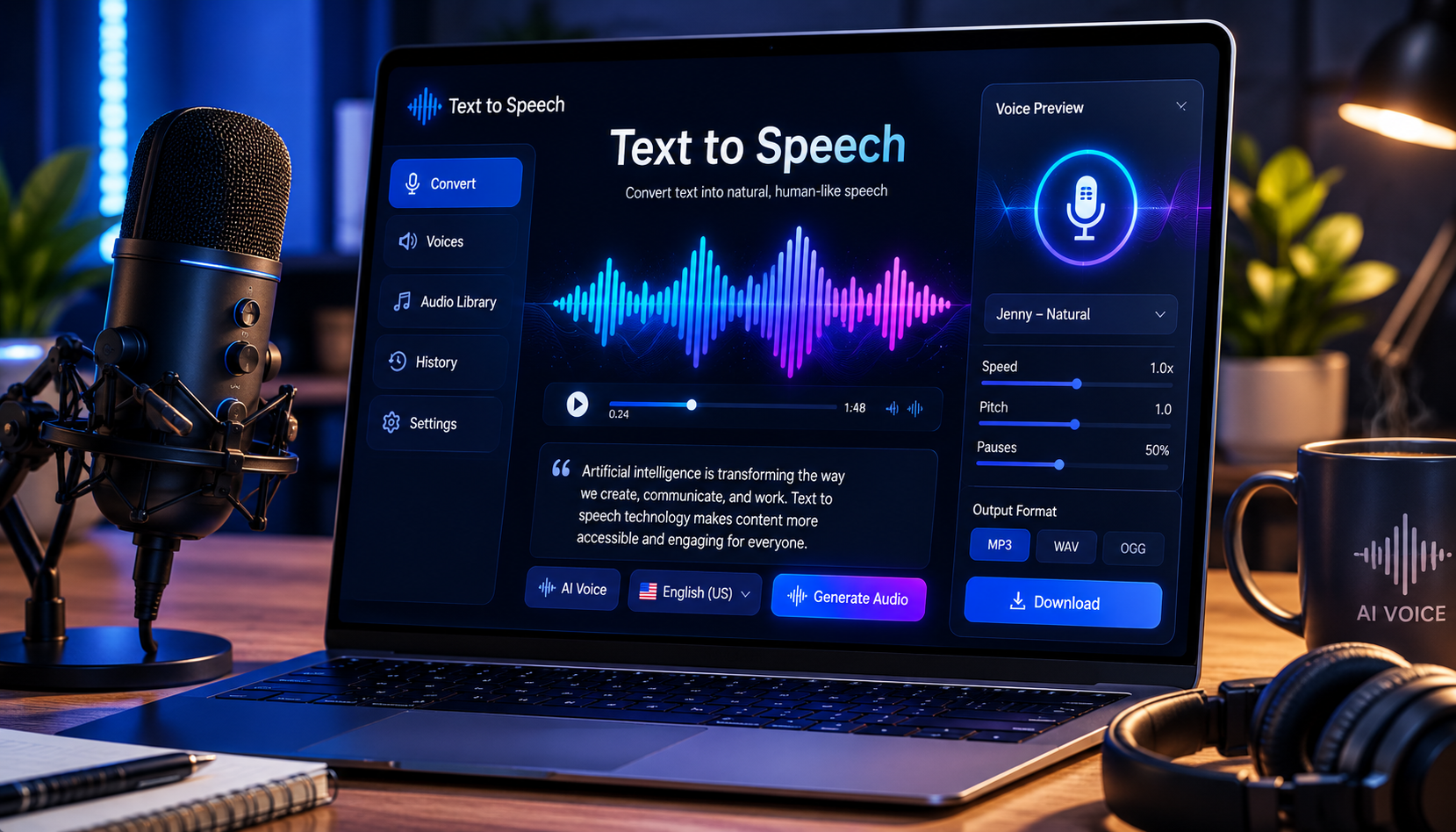
AI voice generation is now a production-ready capability for many content teams. Advances in neural synthesis make voices far more natural than earlier TTS systems, reducing the need for time-consuming studio recordings for many projects. When evaluating options, prioritize three factors: voice quality (naturalness and expressiveness), integration (API/SDK availability and latency for streaming), and legal/licensing terms (commercial use and voice cloning consent). For long-form narration such as audiobooks, test sample chapters to compare prosody and stamina — some voices handle long passages more naturally. Voice cloning is powerful for brand consistency, but it carries ethical and legal obligations; only use cloned voices with clear consent and documented licenses. Pricing models vary: many vendors offer freemium tiers suitable for testing but move to consumption or subscription pricing for production. Consider alternatives like hiring professional narrators for very high-stakes projects or hybrid workflows (human editing + AI rough reads). Notable vendors include ElevenLabs (noted for expressive samples), Murf AI (studio-style controls), PlayHT (broad language support), Speechify (accessibility-focused), Descript (tight editing + overdub), and WellSaid Labs (enterprise narration). Before production, verify language-specific quality, commercial rights, and API limits. Overall, AI voice generators are a cost-effective tool when applied with attention to licensing and quality matching.
0 tools listed
Related categories
High-quality neural voices
Statistical and neural TTS models generate natural intonation, reduced robotic artifacts, and multiple speaker profiles for narration and characters.
Voice cloning / Custom voice creation
Create a custom voice from provided samples (where allowed) to match brand or narrator identity. Typically requires consent and has legal/licensing checks.
SSML and prosody controls
Support for SSML tags, adjustable pitch, rate, volume, pauses, emphasis and phoneme inputs for fine-grained speech shaping.
Multi-language and accent support
Wide language coverage and regional accents for international content; check each provider for specific language availability and quality differences.
Real-time/streaming TTS
Low-latency streaming endpoints for live narration, IVR and interactive agents, with playback-as-you-go capabilities.
APIs and SDKs
Developer APIs and SDKs for programmatic synthesis, batch processing, and integration into web, mobile, or server-side workflows.
Audio export and formats
Export to WAV, MP3, and high-bitrate formats; some platforms include chaptered audiobook outputs and SSML-marked timestamps.
Voice transformation / voice changer
Modify an existing recording's voice (timbre, pitch) or apply creative transformations for character performances.
Frequently asked questions
An AI voice generator uses advanced neural networks to produce more natural intonation, pacing and expressiveness than traditional concatenative or parametric TTS. Modern systems offer voice customization, cloning, SSML support, and sometimes real-time streaming — features that go beyond basic text-to-speech.
Many providers support custom voice creation or voice cloning from recorded samples with consent. Requirements vary: some platforms need minutes of high-quality audio and clear labels. Always confirm licensing, consent, and the provider's security practices before uploading voice data.
Legality depends on license terms and consent. Some voices are available for commercial use under platform licenses; cloned voices require consent from the original speaker. Always check provider terms and consult legal counsel for high-risk or high-volume commercial projects.
Look for platforms with natural prosody, chaptered exports, SSML controls, and batch production features. ElevenLabs, WellSaid Labs and PlayHT are often chosen for long-form work due to voice quality and export options; test sample chapters to compare suitability.
Some platforms offer limited free tiers or trials for short usage, but top-quality voices and licensing for commercial use usually require paid plans. Search for free tiers if budget-constrained, but verify output limits and commercial rights.
Use the provider's API or SDK to request synthesis, stream audio, or pre-render files. Common patterns include server-side batch generation for content libraries, client-side streaming for live narration, and webhooks or queues for asynchronous processing.